
It’s been a while since I’ve written here. Life’s been full, work, motherhood, and everything in between. But lately, I’ve been craving something grounding. Something that feels like home. And nothing does that quite like potjie kos.
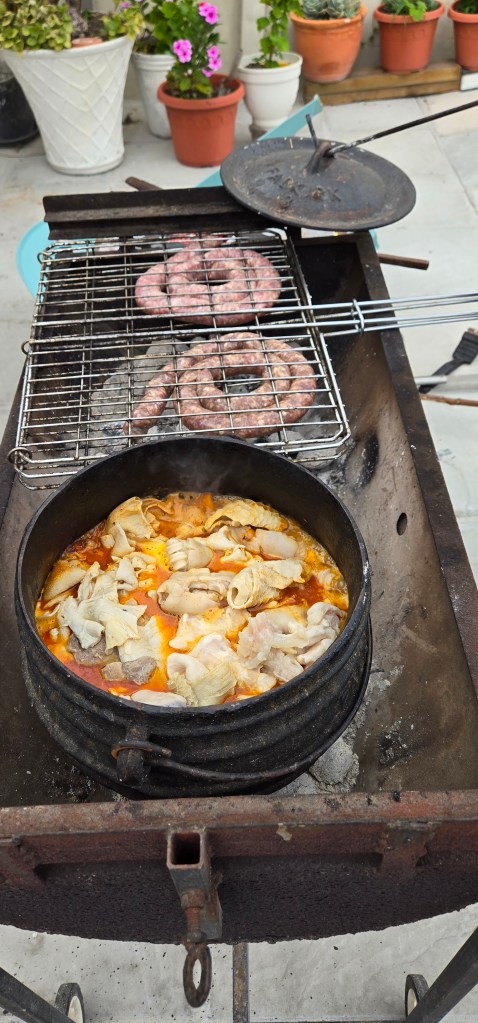
If you’ve never heard of it, potjie kos (pronounced “poy-key kos”) means small pot food in Afrikaans, it’s a slow-cooked stew made outdoors over an open fire, in a cast-iron, three-legged pot. Layers of meat (or seafood), vegetables, and spices are built up and left to simmer for hours. It’s hearty, smoky, and deeply social, it’s the kind of cooking that draws people in long before it’s ready.

Potjie isn’t just food, it’s a ritual. It’s laughter and banter over woodsmoke, the stories that unfold as the fire burns, and the quiet anticipation as the pot bubbles away. Every time the lid lifts, the aroma deepens, and you know you’re closer to that first taste of something truly special.
Whenever I visit home in Cape Town, I have to fit in a braai or potjie kos. It’s part of being South African, a rhythm I can’t, and don’t want to, shake off.
One year, my brother-in-law made a seafood curry potjie, was rich, fragrant, full of magic. Another year, he made afval – tripe, trotters, pens and pootjies slow-cooked in curry. I know it’s not for everyone, but for me, it’s pure nostalgia. It takes me straight back to childhood holidays in the Karoo, at my grandparents’ home, where afval wasn’t fancy it was part of life.

And the truth is, every culture has its version of this, a big pot over a fire, food cooked slow, feeding many. Whether it’s pepper pot in Guyana, adobo in the Philippines, or chili at a Canadian cottage, these meals often mark celebrations, gatherings, and life’s important milestones. The fire might look different, the spices might change, but the spirit stays the same.

That’s what I love about potjie kos: it’s proudly South African, yet beautifully universal. Food that connects us that is slow, simple, and full of soul.
 CocoaGirlinToronto