
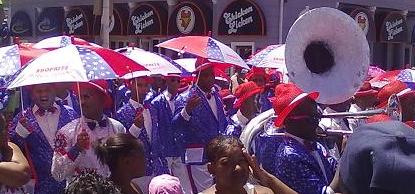
Growing up, Klopse was simply part of what we knew. I had family who participated, and it was woven into the background of our lives, even though I was never someone who marched in the streets or planned my year around the parade.
But culture does not only belong to those at the centre of it. It also belongs to those who carry it quietly, who recognise its meaning even from the edges.
Today I live in Canada, but I still follow what happens back home. When I heard that the date had been changed, I felt compelled to understand why. And in that moment, I realised just how deeply this tradition lives in us, even from afar. Because some things are not about proximity. They are about identity.
I do not claim to speak for everyone. I am not a custodian of this culture, nor do I pretend to be a voice for all. These are simply my reflections, shaped by where I come from, what I carry, and how this moment has landed in me.
The significance of this day cannot be overstated. Moving the Kaapse Klopse away from 2de Nuwe Jaar is a direct slap in the face of our culture. The Cape itself is the birthplace of this tradition. When decisions are made to shift dates or rewrite a history that belongs to us, it feels like a slow erasure of our existence.
Yes, my words may sound strong, but they come from truth. That one day represented the only taste of freedom enslaved people were allowed to experience. It is deeply tied to who we are and where we come from.
The Klopse is not just a celebration. It is a symbol of freedom, a moment to be ourselves, to be seen, and to honour our culture. It represents all of us: Christian, Muslim, spiritual, and secular. It belongs to the people, not to one religion, not to organisers, and not to convenience.
What hurts most is that this move was made by our own people, yet it centres one religious calendar and financial viability over a collective cultural truth. Klopse was never meant to be commercial. It was born from survival, not profit. You do not move a people’s history to make it more convenient or more marketable. You protect it.
And it is not only the date that has been changed. The route has been altered too. That route bears deep significance to the Klopse parade.
The journey from District Six through to Adderley Street was never just about logistics. It told a story: from dispossession to presence, from the margins into the heart of the city. It was a yearly reclaiming of space, a reminder that we are still here.
When you move both the day and the path without collective consent, you are not simply organising an event. You are reshaping how history is walked. And for a people whose stories were so often erased, that feels less like change and more like displacement.
I am proud to be Coloured, in the South African sense of the word. It is not a label given to me by others. It is a history I carry, shaped by survival, resilience, and culture.
I am even more proud now that I have my own daughter. She is growing up in Canada, far from the streets that shaped me, but I want her to know where she comes from. I want her to understand that her story did not begin in this country. It stretches back through oceans, through rhythm and resilience.
Some things must remain anchored, so that even across distance, our children know who they are.
To learn more about the history and cultural roots of the Kaapse Klopse, you can read: https://en.wikipedia.org/wiki/Kaapse_Klopse
 CocoaGirlinToronto
